


New York politics has entered a transformative era. Sweeping legislative actions in Albany have overhauled state labor standards, introducing rigorous compliance mandates that directly impact employers across the five boroughs and regional hubs. As Manhattan business news cycles focus heavily on escalating operational overhead, corporate leadership faces a high-stakes landscape defined by rising wage floors, expanded leave entitlements, and stringent worker classification rules. Organizations operating within New York News Daily coverage zones must act decisively to adapt their internal policies and protect their bottom lines against regulatory penalties.
1. Understanding the New Minimum Wage Thresholds
The foundational shift in New York’s labor framework centers on aggressive minimum wage increases. Effective January 1, 2026, the statutory minimum wage escalated to $17.00 per hour across New York City, Long Island, and Westchester County, while the remainder of the state transitioned to $16.00 per hour. Crucially, Albany has institutionalized future predictability: starting in 2027, annual adjustments will automatically lock into the Consumer Price Index for Urban Wage Earners and Clerical Workers (CPI-W) for the Northeast Region utilizing a three-year moving average.

For employers in Manhattan's hospitality, retail, and service sectors, tipped worker structures demand meticulous payroll recalibration. NYC service employees must now receive a minimum cash wage of $14.15 per hour paired with a $2.85 tip credit, whereas food service workers command at least $11.35 in cash wages alongside a $5.65 tip credit. Specialized sectors face even steeper benchmarks; home care aides in the metropolitan region saw their baseline climb to $19.65 per hour. Ignoring these tiered adjustments sparks immediate state scrutiny and costly litigation.
2. Navigating Paid Family Leave Expansions
New York’s Paid Family Leave (PFL) program continues to expand its financial footprint, providing eligible employees with up to 12 weeks of job-protected, paid time off annually. Benefit calculations are tied directly to the New York Statewide Average Weekly Wage (NYSAWW). With the NYSAWW established at $1,833.63, the maximum weekly benefit ceiling sits at $1,228.53: representing a substantial upward adjustment from previous years.
Employers must review their insurance policies and payroll deductions to ensure seamless contributions. While employee-funded payroll deductions finance the program, human resources departments carry the administrative burden of tracking intermittent leave, coordinating with insurance carriers, and preserving job reinstatement rights. Failure to properly administer PFL claims exposes companies to severe administrative fines and employee grievances.
3. Demystifying Gig Worker Classification and App-Based Mandates
The modernization of New York labor law addresses the explosive growth of the gig economy, introducing landmark protections for app-based workers. New York City regulations enforce a mandatory baseline pay rate of at least $17.96 per hour for app-based restaurant delivery workers covering all connected time: including mandatory waiting periods between dispatches: exclusive of tips.
For traditional businesses utilizing independent contractors or hybrid staffing models, the boundary between independent status and employee misclassification grows increasingly narrow. State authorities are aggressively auditing enterprises that improperly classify workers to evade tax withholding, workers' compensation obligations, and unemployment insurance contributions.
4. Enforcing Strict Pay Frequency Compliance
Operational compliance in New York extends beyond wage rates into the exact timing of compensation. New York Labor Law Section 191 dictates rigid payroll intervals based on occupational duties. Specifically, "manual workers": defined as employees who spend more than 25% of their working time performing physical labor: must be paid on a weekly basis, no later than seven calendar days after the end of the week in which the wages were earned.

Many corporate executives operating in warehousing, logistics, manufacturing, and building maintenance inadvertently violate this mandate by utilizing standard bi-weekly payroll cycles for manual staff. Recent class-action lawsuits under New York labor statutes have weaponized this provision, resulting in crippling settlements for affected companies. Migrating manual labor payrolls to weekly disbursements is an urgent prerequisite for risk mitigation.
5. Five Actionable Steps for Business Owners
To safeguard enterprise value and maintain flawless regulatory standing across the Empire State, management teams should execute the following five-step compliance blueprint:
- Conduct Comprehensive Wage Audits: Cross-reference all employee compensation records against current geographical minimum wage thresholds, ensuring zero discrepancies in hourly, salaried, or tipped positions.
- Revise Employee Handbooks: Update corporate governance documents to reflect expanded leave entitlements, anti-retaliation policies, and remote work expense reimbursements.
- Transition Manual Worker Payrolls: Audit job descriptions to identify employees crossing the 25% physical labor threshold and immediately establish weekly pay schedules.
- Scrutinize Independent Contractors: Evaluate freelance and gig economy contracts to eliminate misclassification liabilities under evolving state enforcement priorities.
- Establish Proactive Legal Oversight: Retain specialized employment counsel to monitor ongoing legislative shifts in Albany and conduct biannual internal compliance reviews.
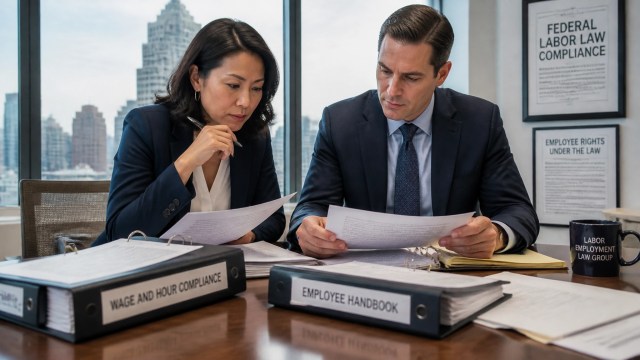
Navigating the complexities of New York politics and labor regulations requires unyielding vigilance. By embracing these strategic adjustments today, business leaders can insulate their organizations from liability and position themselves for sustainable growth within Manhattan's competitive commercial ecosystem.