

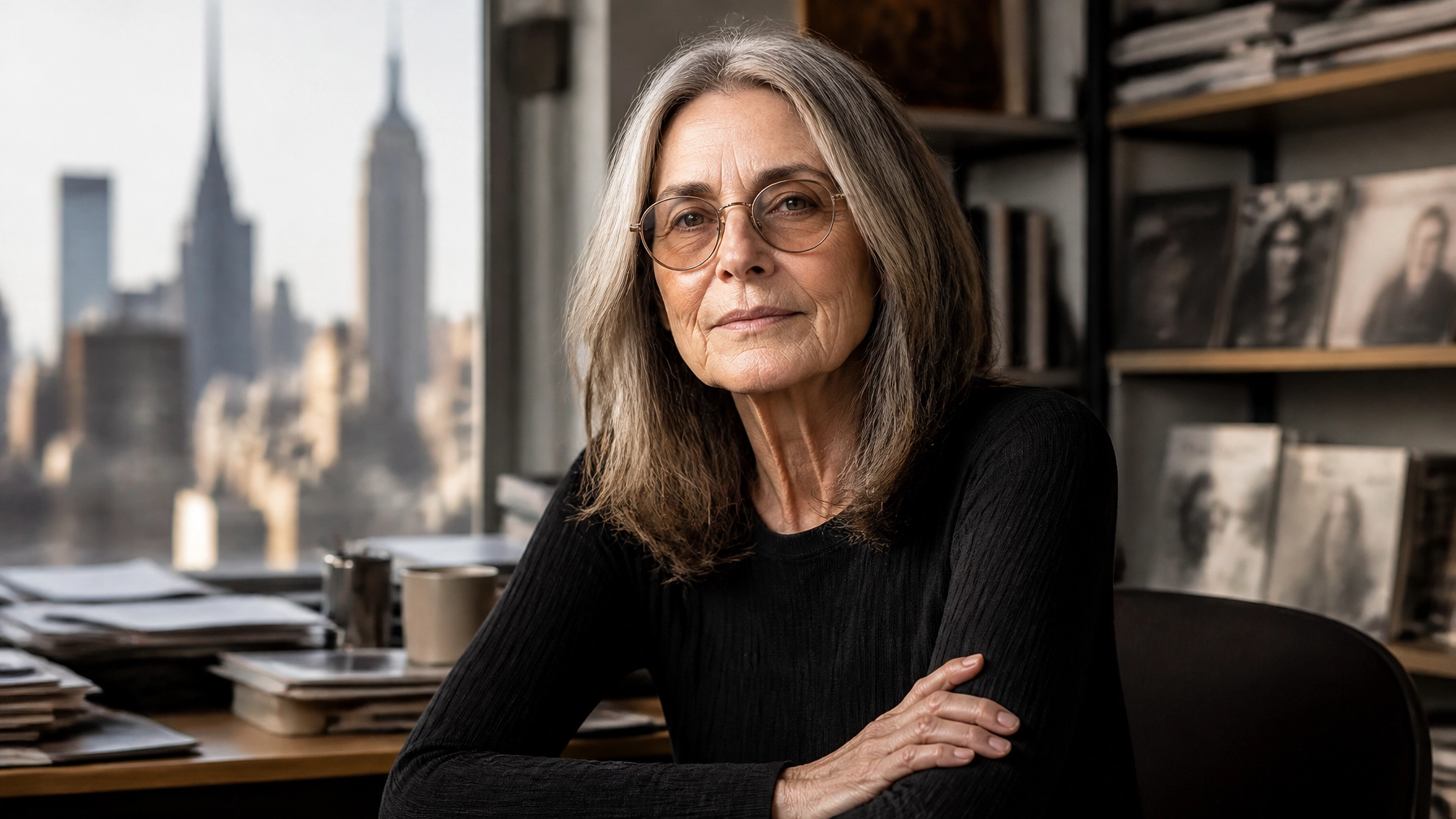
Gloria Steinem, the journalist, feminist organizer and co-founder of Ms. magazine who helped move women’s rights from the margins of public debate into the center of American politics and culture, died at 92 in her Manhattan home on September 3, 2026.
Her death closes the life of one of the most recognizable figures in the modern women’s movement, but it does not end the arguments she advanced through reporting, organizing and public persuasion. Steinem’s work confronted discrimination in the workplace, unequal political representation, reproductive-rights restrictions, gender-based violence and the cultural assumptions that limited women’s choices.
For New York, her death is also the passing of a figure whose professional and personal life became closely tied to the city’s media, political and activist communities. Her Manhattan apartment served for decades as a gathering place for writers, artists, organizers and public officials, reflecting the city’s role as both her home and the national launchpad for her ideas.
From Ohio to New York journalism
Steinem was born in Toledo, Ohio, on March 25, 1934, and graduated from Smith College in 1956. After college, she spent two years in India, where she encountered grassroots organizing and developed a deeper understanding of how social movements could build power outside traditional institutions.
She moved to New York City around 1960 and began establishing herself as a journalist at a time when women were often confined to lifestyle coverage, while political reporting remained dominated by men. Her early work ranged across social issues, popular culture and politics, but she increasingly focused on the gap between public ideals and women’s lived experiences.
In 1963, Steinem gained national attention after working undercover as a Playboy Bunny at the Playboy Club in Manhattan. Her reporting documented the club’s working conditions and exposed the economic and social pressures placed on women in an industry that marketed glamour while offering limited power or protection to its employees.
The assignment helped define her reputation as a determined reporter willing to enter spaces that mainstream journalism had overlooked. It also anticipated a central theme of her later activism: that personal experiences dismissed as private or ordinary were often evidence of larger political and economic systems.
A New York voice with national reach
Steinem helped found New York magazine in 1968 and wrote features and political commentary for the publication, including the influential “The City Politic” column. The magazine gave her a platform to examine urban life, elections, social change and the power structures shaping New York.
Her writing connected the city’s daily realities to national questions. Housing, employment, public policy and media representation became part of a broader discussion about who held authority and whose experiences were considered worthy of public attention.
That approach made Steinem an important bridge between journalism and political organizing. She did not treat reporting as separate from civic life; instead, she used journalism to identify patterns, give language to inequality and build an audience for reform.
Her work also helped redefine the role of the female journalist in American public life. Steinem became a national commentator without abandoning the reporting instincts that had shaped her career, and she brought the discipline of a writer to debates that were often reduced to slogans or personality conflicts.
The launch of Ms. magazine
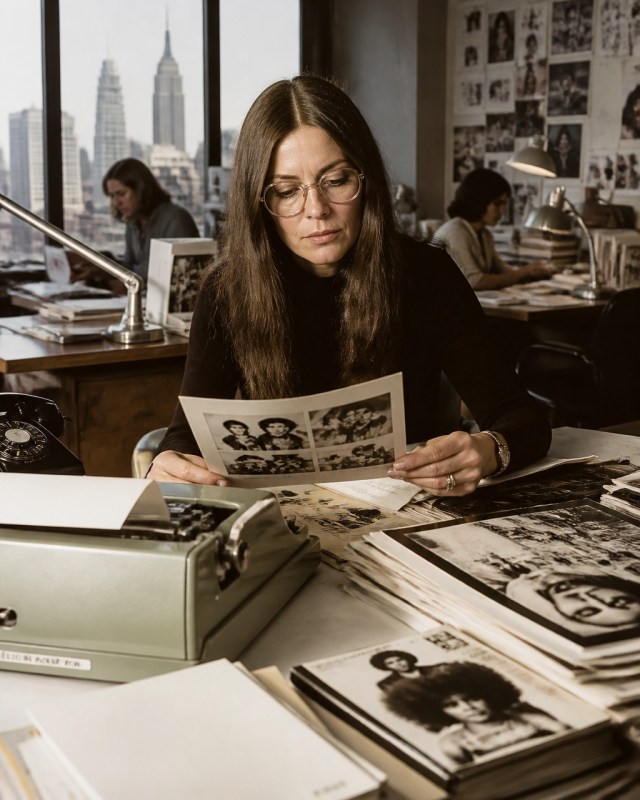
In 1971, Steinem joined other activists and writers in creating Ms. magazine. The publication first appeared as a special insert in New York magazine before becoming an independent national magazine in 1972.
At a time when many mainstream publications treated women primarily as consumers, Ms. presented women as political actors, workers, parents, writers and organizers. Its coverage addressed abortion, domestic violence, sexual harassment, equal pay, family policy and sexism in institutions that had rarely examined those subjects seriously.
Steinem’s editorial role helped give the magazine a clear public voice, but Ms. was larger than any one editor. It became a meeting point for a broad movement that included labor activists, civil-rights organizers, academics, artists and women working in local communities.
The magazine also demonstrated the influence of New York’s publishing industry. From a city known for its newspapers, magazines and advertising culture, Ms. challenged the assumptions of the media business itself and proved that feminist journalism could attract a national audience.
Its legacy can be seen in the continued growth of specialized publications, digital outlets and independent platforms focused on gender, politics and social justice. Many of those outlets operate in a media environment that Steinem helped make possible.
Building organizations beyond the page
Steinem understood that journalism could change public language, but she also believed lasting progress required institutions capable of organizing people and resources.
In 1971, she co-founded the Women’s Action Alliance, which supported feminist education and grassroots organizing. The same year, she helped establish the National Women’s Political Caucus with leaders including Betty Friedan, Bella Abzug and Shirley Chisholm.
The caucus sought to recruit, train and support women pursuing elected and appointed office. Its work reflected Steinem’s belief that representation was not simply symbolic: political institutions made decisions about employment, health care, education, family life and personal autonomy.
She also helped establish the Ms. Foundation for Women, Voters for Choice and the Women’s Media Center. These organizations extended her work into philanthropy, electoral politics and media representation, creating networks that could outlast individual campaigns.
Steinem’s organizing style often emphasized coalition-building. She worked across movements and generations, connecting feminist causes with civil rights, labor advocacy, peace efforts and opposition to gender-based violence. That strategy sometimes produced tensions, particularly over questions of race, class, sexuality and political priorities, but it also helped expand the reach of the women’s movement.
A lasting influence on New York politics
Steinem’s impact on New York politics extended beyond formal office. She helped shape how candidates, journalists and voters discussed women’s participation in public life.
Her advocacy contributed to a political culture in which issues once treated as private matters became subjects of legislation and public accountability. Reproductive rights, workplace discrimination, sexual harassment and domestic violence entered campaigns, hearings and newsroom agendas with greater force.
New York’s political ecosystem: stretching from city government and state campaigns to unions, advocacy groups and media organizations: provided a natural setting for that work. Steinem’s Manhattan home became part of the city’s informal infrastructure of influence, where conversations over dinner could lead to campaigns, publications or new organizations.
Her relationship with New York was therefore not based only on residence. It was built through decades of work in the city’s newsrooms, political circles and cultural institutions. For readers following NYC lifestyle news and New York politics, her biography offers a portrait of how private spaces and public movements can overlap in a city where ideas often travel quickly from apartments and editorial offices into national debate.

Writing a movement into history
Steinem’s books expanded her influence beyond speeches and magazine articles. Her work included Outrageous Acts and Everyday Rebellions, Revolution from Within, Moving Beyond Words, My Life on the Road and The Truth Will Set You Free, But First It Will Piss You Off.
The books combined memoir, political analysis and feminist commentary. They also revealed the personal dimensions of a public career defined by travel, debate and organizing. Steinem frequently wrote about the importance of listening, the role of storytelling in political change and the need to challenge hierarchies within reform movements.
Her public speaking carried the same blend of clarity and accessibility. She could address college students, labor groups, elected officials and national television audiences without reducing complex issues to a single constituency.
In 2013, President Barack Obama awarded Steinem the Presidential Medal of Freedom, the nation’s highest civilian honor. The recognition formalized what generations of activists, journalists and readers had already understood: her work had changed the vocabulary of American democracy.
Remembering her Manhattan legacy
Steinem remained associated with a style of activism that was both highly visible and deeply personal. She was frequently photographed at rallies and political events, but much of her influence was built through quieter work: conversations with younger organizers, editorial decisions, fundraising appeals, coalition meetings and years of travel between communities.
Her Manhattan apartment represented that less-public dimension of her life. It was a place where movement history was discussed not as an abstraction but as an ongoing responsibility. Activists and artists could meet there, exchange ideas and develop campaigns that would later appear in newspapers, legislative debates or national broadcasts.
Her death at home in New York gives special resonance to the city’s remembrance. Steinem was not born in New York, but the city became the central setting of her professional life and the base from which her influence spread across the country.

Gloria Steinem leaves behind a journalism legacy rooted in firsthand reporting, a political legacy grounded in coalition-building and a cultural legacy defined by the insistence that women’s experiences belong in public conversation.
The movements she helped build continue to face divisions, setbacks and new political challenges. Yet the institutions she co-founded, the writing she published and the journalists and organizers she encouraged remain part of the American civic landscape.
For New York, her passing marks the end of an era shaped by print journalism, grassroots feminism and high-stakes political organizing. For the broader women’s movement, it is a moment to remember not only an icon, but also a reporter who understood that changing society begins with naming what powerful institutions prefer to leave unseen.
Sources and further reading
- The New York Times: Gloria Steinem obituary
- NPR: Gloria Steinem, trailblazing journalist and activist
- Encyclopaedia Britannica biography of Gloria Steinem
- National Women’s History Museum biography
- Women’s Media Center
- New York News Daily
- New York News Daily Business coverage