

Anya Marcon’s anthology moves beyond its New York Fashion Week debut with 22 contributors whose careers span modeling, film, televisionAfter the Launch, Model Life Turns to the Women Inside the Book
By Peter Koloff

The launch is the easy part, and everyone in the room seemed to know it.
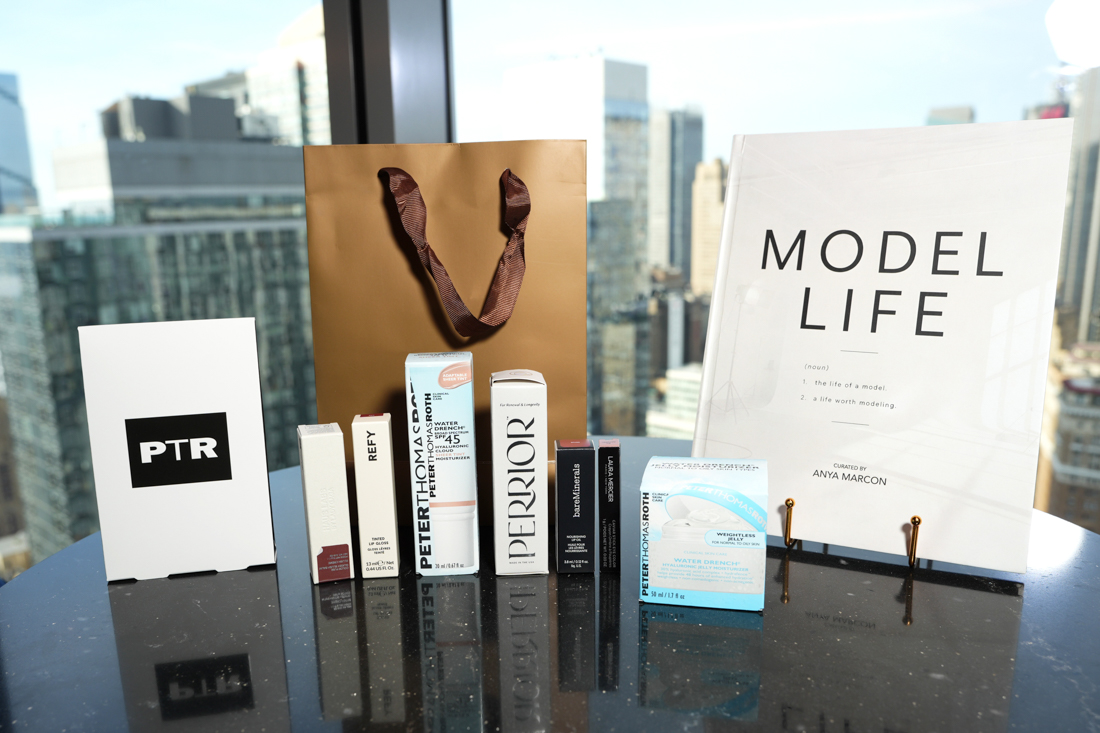
At The Riff Raff Club in Manhattan, models, contributors, creators and fashion-world personalities had gathered to celebrate the release of Model Life. The atmosphere had the polish of a Fashion Week kickoff, but the most revealing moment came when the room quieted and Anya Marcon began talking about her own journey as a model and the experiences that pushed her toward creating the book.
By now the photographs have circulated and Fashion Week has moved on, which leaves Model Life facing the part that actually decides a book’s life: whether the story continues after the room empties.
For Marcon’s anthology, that answer depends less on the launch than on the 22 women whose lives fill its pages, and on how differently those lives turned out.
The book gathers models, actors, entrepreneurs, creators and media figures who share a starting point and almost nothing else. Some became recognizable through campaigns. Others moved into film and television. Several built companies or platforms of their own.
The effect is that Model Life reads less like a book about modeling than a collection about what happens after a woman is first noticed, and who gets to decide what comes next.
The Range Is the Point
Yaya DaCosta moved from America’s Next Top Model into a substantial acting career across television and film.
Eugenia Kuzmina went another direction entirely, moving from international modeling into acting and comedy, with a career stretching from luxury fashion to Hollywood.
Skye Stracke represents a more traditional high-fashion trajectory, with work for major fashion houses and international editorial titles.
Eugena Washington, familiar to audiences through modeling and television, has since expanded into media and entrepreneurial work.
And Zarina Yeva represents a newer generation in which the line between model, actress and digital creator has become increasingly difficult to separate.
Put them together and the premise begins to announce itself.
For decades, a model’s cultural value was often measured through magazine covers, runway bookings and campaign counts.
That accounting no longer holds.
A model today may also be a founder, producer, actress, entrepreneur or media personality. Her audience may exist as much on a phone as it does on a newsstand.
Model Life becomes, in part, a record of that shift.
Visibility Isn’t Ownership
Fashion manufactures visibility quickly.
A single campaign can place someone in front of millions of people almost overnight.
But visibility is not ownership, and the distance between the two may be the more interesting subject.
Ownership begins when the person being photographed starts building something the photograph cannot contain: a company, an acting career, a media platform, a family, or simply the ability to define herself without waiting for an industry to do it first.
That is what lifts Model Life above the usual fashion collection.
It is not simply documenting images.
It is documenting what comes after them.
Marcon puts the idea plainly in the book’s foreword: “Model Life began as a book about modeling, but it became something much bigger.”
That “something bigger” is the point.
The anthology gives its contributors space to author their own narratives around ambition, reinvention, grief, motherhood, identity, entrepreneurship, creativity and resilience. Rather than asking the reader to look at these women, it asks the reader to listen to them.
The Test Comes After Fashion Week
The project launched with real advantages: a New York Fashion Week platform and an audience already familiar with many of the names inside.
The team behind the book reports that Model Life reached Amazon bestseller status less than 24 hours after its release.
Early momentum matters.
But Fashion Week is exceptional at producing moments, and moments are the easy part.
The harder trick is turning one into something that still matters months later.
Model Life has an unusual asset there.
Its contributors already occupy different corners of culture, and each brings her own audience, career and community into the project. That gives the anthology something most new books never have: a network built around the people inside it before the first copy is sold.
The structure also matters.
These are not profiles written about 22 women from a distance. The project gives the women themselves space to tell their stories, moving the model from subject to narrator.
That distinction may ultimately be more important than the Fashion Week launch or the early sales ranking.
A Format, Not Just a Book
The most interesting possibility is what happens next.
Nothing about Model Life‘s premise requires it to end with one volume.
The concept could extend naturally into future books, filmed conversations, live discussions or profiles of women whose careers have long since outgrown the industries that first made them visible.
That may ultimately become Marcon’s larger achievement.
Not simply publishing a book about models, but creating a format in which women who spent years being photographed become the ones setting the terms.
Fashion gave many of them an image.
What they built beyond it is the better story.


