


A high-stakes legal challenge filed in Albany County has thrown a spotlight on New York politics and regulatory oversight, targeting state environmental permits issued for Micron Technology's planned $100 billion semiconductor manufacturing facility in Onondaga County. The litigation, spearheaded by environmental advocacy coalitions and local residents, escalates ongoing tensions over industrial development in Upstate New York news, centering on unresolved concerns regarding per- and polyfluoroalkyl substances: commonly known as PFAS or "forever chemicals": and massive greenhouse gas emissions.
The newly initiated lawsuit challenges both the industrial wastewater and Title V air permits granted by the New York State Department of Environmental Conservation (DEC). According to legal filings submitted in the state capital, the permits fail to establish strict, enforceable numeric limits for dozens of toxic PFAS compounds expected to result from advanced semiconductor fabrication. Plaintiffs argue that state regulators deferred critical environmental safeguards, authorizing facility operations before establishing comprehensive site-specific controls to protect local ecosystems and neighboring residential communities.
Regulatory Deadlocks and Environmental Stakes
The controversy underscores a complex friction point within contemporary New York politics, balancing aggressive economic development goals against stringent environmental mandates. State economic developers have hailed Micron’s monumental $100 billion megafab in the town of Clay as a historic economic catalyst for Upstate New York, promising thousands of high-paying engineering and construction jobs. However, watchdog groups and community coalitions contend that the approval process was expedited at the expense of rigorous environmental due diligence.
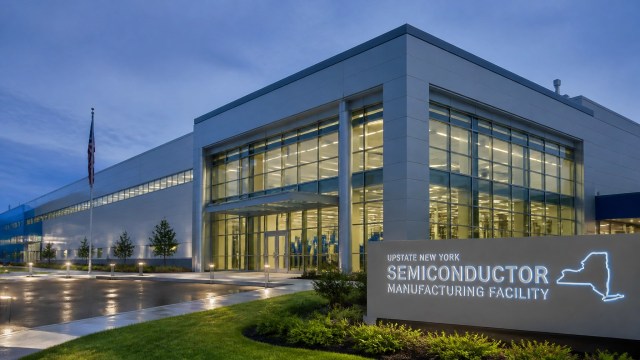
At the heart of the legal dispute is the handling of industrial discharge. Legal briefs point out that while the DEC's wastewater permit permits the potential discharge of up to 40 distinct PFAS compounds into municipal and industrial wastewater systems, it establishes mandatory limits for only two chemicals that Micron asserts are not utilized in its manufacturing processes. Environmental advocates argue this regulatory loophole leaves actual chipmaking emissions virtually unregulated, relying instead on quarterly monitoring rather than proactive prevention.
Furthermore, critics argue that the Title V air permit permits unrestricted emissions of toxic pollutants and greenhouse gases during initial operational phases. The challenge asserts that postponing chemical-specific limits pending future study directly violates both federal clean water standards and New York's ambitious Climate Leadership and Community Protection Act (CLCPA), which mandates aggressive statewide emissions reductions.
Broadening Legal Fronts Across the Capital Region
This latest permit challenge builds upon a pre-existing lawsuit filed earlier in the year by grassroots coalitions, including Neighbors for a Better Micron and Jobs to Move America. That foundational litigation challenges the adequacy of the project's sprawling 22,000-page environmental impact statement. Plaintiffs in that action argued that public comment windows were unduly restricted and that comprehensive cumulative impacts: ranging from wetland destruction in Onondaga County to regional energy grid demands: were inadequately evaluated.

Legal experts monitoring developments in Albany note that the converging lawsuits represent a watershed moment for environmental jurisprudence in New York. The outcome could establish vital legal precedents for how state regulatory agencies balance large-scale industrial projects with public health protections. As reported by outlets tracking Albany NY news, community stakeholders and industry representatives alike are preparing for protracted courtroom battles that could influence the construction timeline of the nation's largest semiconductor complex.
The debate also highlights broader anxieties regarding PFAS bioaccumulation and public health. Scientific literature consistently links persistent forever chemicals to severe medical conditions, including immunological disorders, reproductive complications, and certain forms of cancer. Residents in Onondaga County and surrounding municipalities have repeatedly demanded greater transparency regarding chemical inventories, emergency response protocols, and long-term air and water quality monitoring strategies.
Implications for Regional Development and State Policy
As the legal proceedings unfold in Albany County Supreme Court, state officials face mounting pressure from both sides of the aisle. Proponents of the Micron facility emphasize that cutting-edge domestic chip manufacturing is vital for national security and economic revitalization across Upstate New York. They point to comprehensive mitigation funds, wetland restoration commitments, and collaborative workforce training programs as evidence of responsible corporate and governmental stewardship.

Conversely, environmental litigators maintain that economic ambition cannot supersede statutory environmental protections. The legal teams representing the plaintiffs are urging the judiciary to vacate the disputed permits and mandate a comprehensive supplementary environmental review before any heavy construction or chemical processing commences.
For New York News Daily, coverage of this evolving dispute remains a core priority, capturing the intricate intersection of state governance, technological innovation, and environmental stewardship. As hearings proceed in the coming weeks, the decisions rendered in Albany will undoubtedly reverberate across the state's political and industrial landscape for generations to come.