

Local officials, historians, and urban planners in New York's Capital Region are advancing ambitious initiatives to unearth and revitalize the historic marine infrastructure at Lock 1 on the Erie Canal. Reported recently by CBS6 Albany, the ongoing efforts represent a powerful intersection of Upstate New York history and modern waterfront development, aiming to reconnect downtown Albany with the Hudson River after decades of industrial separation.
For residents across Upstate New York and observers of New York News Daily, this project offers a compelling glimpse into how historic preservation can drive contemporary urban renewal. By transforming dormant 19th-century infrastructure into an active recreational and economic anchor, city leaders hope to spark a new wave of regional tourism and community engagement along the northern waterways.
The Archaeological Breakthrough in the Warehouse District
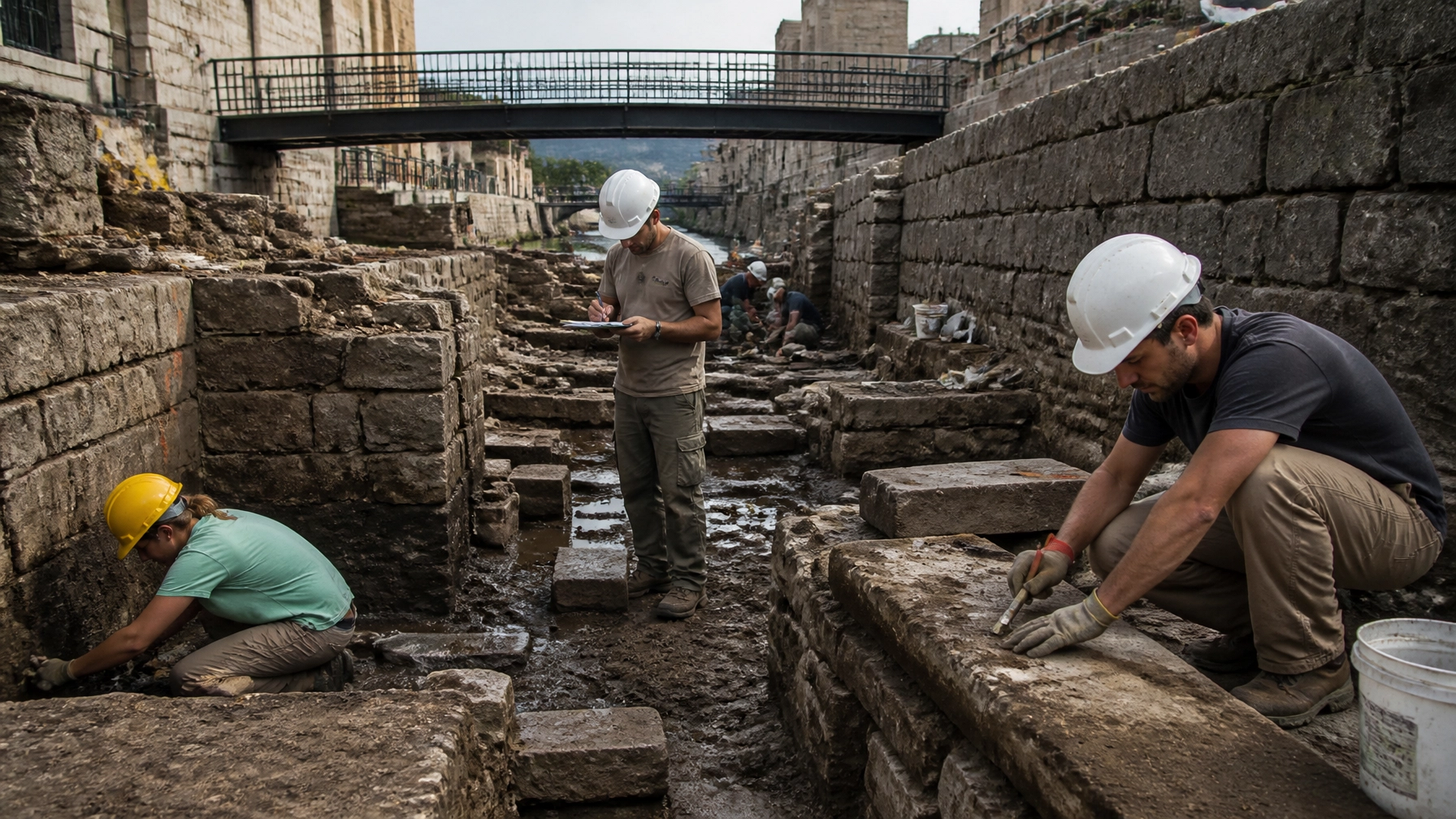
The momentum behind the Lock 1 restoration initiative accelerated significantly following archaeological investigations led by SUNY Polytechnic Institute in collaboration with Albany Waterway Inc. Utilizing ground-penetrating radar and exploratory excavation in Albany’s historic Warehouse District, researchers successfully pinpointed and uncovered both ends of the original Lock 1 just 1.5 feet beneath the modern surface.
+--------------------------------------------------------------------------+
|                       ALBANY WATERWAY PHASING                            |
|                                                                          |
|  Phase 1: Restore Historic Lock 1                                        |
|  Phase 2: Construct Modern Marina at SUNY Plaza                          |
|  Phase 3: Connect Lock & Marina via Canal along Broadway Under I-787      |
+--------------------------------------------------------------------------+
The discovery validated decades of historical mapping and confirmed that the physical remains of the legendary canal lock remain remarkably intact. Archaeologists revealed beautifully preserved granite blocks, original ironwork mounts, and the precise chamber geometry that once elevated commercial barges between the Hudson River and the Erie Canal system. This tangible link to the canal era has galvanized local support, turning what was once a theoretical preservation concept into a concrete infrastructure proposal.

A Phased Vision for the Albany Waterway
The revitalization of Lock 1 is the cornerstone of the broader Albany Waterway vision: a multi-phase master plan designed to re-establish maritime access in New York's capital city. According to project outlines reviewed by city planners and regional stakeholders, the initiative unfolds across three distinct stages:
- Phase 1: Historic Lock Restoration : Unearthing, stabilizing, and restoring the structural integrity of Lock 1, including the installation of historically accurate replica gates and water-control mechanisms.
- Phase 2: Marina Infrastructure : Constructing a fully functional modern marina basin near SUNY Plaza to accommodate recreational watercraft, tour boats, and paddle sports.
- Phase 3: Canal Connection : Engineering a navigable canal link along Broadway beneath the Interstate 787 corridor, effectively bridging the physical barrier that currently separates downtown Albany from its historic riverfront.
This phased approach allows urban planners to tackle complex logistical hurdles incrementally while securing state and federal grant funding along the way.
Engineering Integrity and Architectural Heritage
An engineering assessment commissioned by project stakeholders delivered remarkably positive news regarding the structural soundness of the lock chamber. Measuring approximately 22 feet deep and currently filled with compacted historical fill material, the granite walls of Lock 1 show minimal shifting or structural degradation.

Engineers noted that the precision-cut stone masonry: laid down in the early 19th century: stands as a testament to the master stonemasons of the Erie Canal era. Unlike modern concrete structures that require frequent rehabilitation, the dry-laid and mortar-sealed granite blocks have withstood over a century of subsurface pressure and environmental shifts. Preserving these authentic textures is a primary objective for preservationists, who intend to integrate the original masonry directly into the finished marina design.
Economic Realities and Funding Hurdles
While the engineering assessments and archaeological discoveries have generated widespread enthusiasm, the initiative faces significant financial realities. Industry analysts and municipal leaders frequently refer to the endeavor as the "$200 million question," pointing to the substantial capital required to complete all phases of the downtown waterfront transformation.
Preliminary cost estimates indicate that unearthing Lock 1, reinforcing its perimeter, and refilling the basin with water will require roughly $10 million in direct construction and site preparation outlays. When combined with the proposed SUNY Plaza marina basin and the Broadway canal connector, county-backed feasibility studies place the total scope well into the hundreds of millions of dollars.

Despite the formidable price tag, state backing has gained traction. The Downtown Albany Strategy: bolstered by state-level urban renewal grants: incorporates preliminary architectural renderings of the Lock 1 marina, signaling official recognition from state leaders. Albany Waterway Inc. continues to lobby for dedicated state and federal infrastructure grants, positioning the project as both a cultural heritage restoration and an economic catalyst for Upstate New York.
Reconnecting Downtown Albany to the Hudson River
Beyond the engineering blueprints and economic spreadsheets lies the profound cultural impact of returning water to downtown Albany. For generations, the construction of Interstate 787 and post-industrial decline walled the city off from the Hudson River, cutting residents and visitors off from the waterway that originally fueled New York's commercial ascendancy.

The integration of the Lock 1 marina directly addresses this historical disconnect. By creating a navigable recreational corridor, Albany joins cities across the United States that are successfully reclaiming their industrial waterfronts for public enjoyment, tourism, and commercial enterprise. Local business associations anticipate that a completed marina and heritage park will draw boaters cruising the Erie Canal and Hudson River corridor, infusing vital tourist revenue into downtown retail, hospitality, and dining establishments.
As planning groups finalize their environmental reviews and push for additional funding allocations, the unearthing of Lock 1 stands as a powerful reminder of New York's engineering legacy. With local officials committed to moving the project forward, Albany is steadily closing the gap between its storied past and a vibrant, water-connected future.