

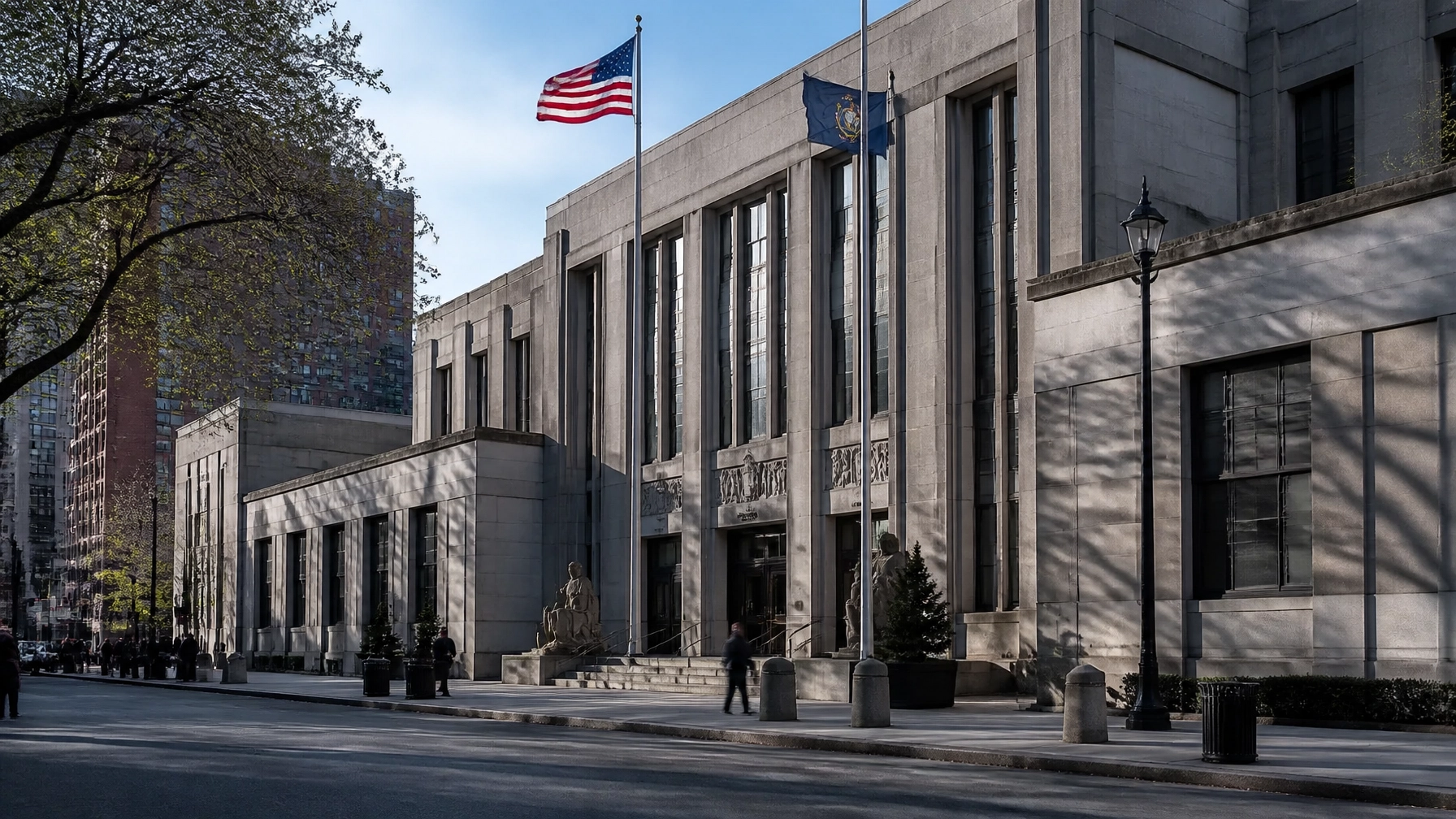
A Staten Island judge has temporarily blocked key parts of Mayor Zohran Mamdani’s pied-à-terre tax rollout after three homeowners sued the city, intensifying a legal confrontation over how New York identifies and notifies owners of high-value second homes.
State Supreme Court Justice Wayne M. Ozzi issued the temporary restraining order on Monday, August 10, directing the city to stop publicly posting its supplemental property roll and to halt further action based on the roll or related notices while the case proceeds.
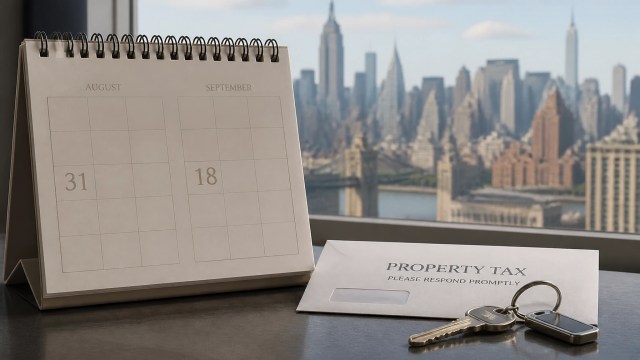
The order also temporarily blocked enforcement of the city’s exemption deadline, which had been extended from August 21 to September 18.
The ruling quickly triggered another legal dispute after the city filed papers indicating that it would appeal. City officials contend that the appeal automatically stays the temporary restraining order under New York civil procedure rules, allowing the tax rollout to continue while the courts review the matter.
The homeowners’ attorney disputes that interpretation and has warned that the city could face contempt proceedings if it continues implementing the surcharge.
The competing claims have created immediate uncertainty for property owners, real-estate attorneys, and city officials preparing for a pivotal hearing scheduled for August 31 in Richmond County.
Homeowners challenge the rollout, not the tax itself
The lawsuit was brought by Simon Hedley, Rachel O’Brien, and Carmine Morano, who are represented by Randy Mastro, a former first deputy mayor under Eric Adams.
The plaintiffs do not challenge the underlying legality of a pied-à-terre surcharge. Instead, they are challenging the city’s method of administering the program, including the publication of a broad supplemental property roll and the mailing of approximately 17,000 notices to owners whose properties may be subject to the tax.
The homeowners argue that the city incorrectly identified primary residences as potential second homes and improperly shifted the burden of proof onto residents.
Their petition says the public roll caused “mass confusion” and exposed property owners to unwanted scrutiny and ridicule. The plaintiffs also contend that the city’s notices did not clearly explain why particular properties had been flagged or what evidence homeowners needed to submit to avoid the surcharge.
The legal challenge has therefore centered on due process, notice requirements, and the city’s authority to rely on a mass property list before making individualized determinations.

What the temporary restraining order does
Justice Ozzi’s order directs the city to remove or stop publicly displaying the supplemental property roll, which includes roughly 900,000 residential properties listed in the city’s Tax Class 1 records.
The order also bars the city from taking further action based on the roll or the mailed notices without providing individualized determinations and proper notice to affected owners.
The judge cited the possibility of irreparable harm, particularly because homeowners who received notices could be forced to respond to a tax designation without knowing why their properties were selected.
The order temporarily affects the September 18 exemption deadline as well. Under the city’s program, owners who received a notice must establish that the property is their primary residence or otherwise qualifies for an exemption.
The city had already extended that deadline from August 21 to September 18, giving homeowners additional time to gather documents and submit applications.
Because the city has appealed, however, the practical status of the order remains contested. The city has said it will continue the rollout, while the homeowners maintain that the restraining order remains binding.
FOX 5 New York reported that the judge directed the city to stop further action related to the 17,000 notices. amNewYork’s coverage reported that the city’s appeal triggered an automatic stay and that the supplemental roll remained available on the Department of Finance website.
The tax targets high-value second homes
Mamdani’s pied-à-terre proposal targets non-primary residences in New York City, including certain one-, two-, and three-family homes valued at more than $5 million.
Condos and cooperative apartments may qualify for the surcharge at lower property-value thresholds, beginning at $1 million under the city’s stated framework.
The measure is designed to raise additional revenue from wealthy owners who maintain expensive New York residences but claim primary residences elsewhere.
Mamdani campaigned on a broader promise to increase contributions from affluent property owners and direct new revenue toward city priorities, including affordability and public services.
The program has drawn support from advocates who argue that high-value second homes should contribute more to the city’s finances. Opponents say the rollout risks burdening primary homeowners, creating administrative confusion, and exposing private property information through an overly broad public roll.
The dispute has particular significance for Manhattan business news because luxury residential properties, investment holdings, and pied-à-terre ownership are closely tied to the city’s high-end real-estate market.
Although the lawsuit was filed in Staten Island, its consequences could reach owners across all five boroughs and influence how the city administers future property-based taxes.
Judge’s property appears on the disputed roll
The controversy gained another dimension after an amNewYork review of city records found that Justice Ozzi and his wife, Lucy, appear as owners of a one-family home in Annadale on the fiscal year 2027 supplemental property roll.
The city values the property at approximately $1.109 million, well below the $5 million threshold for one-, two-, and three-family homes. There is no evidence that Ozzi received one of the approximately 17,000 notices sent to owners whose properties were identified as potentially subject to the surcharge.
The judge’s appearance on the broad roll has prompted questions about disclosure, although legal experts cited by amNewYork said the listing alone did not necessarily require recusal.
The issue underscores one of the plaintiffs’ central complaints: the supplemental roll is expansive and includes properties that may not ultimately be subject to the tax.
Legal scholars also differed over whether Ozzi should have disclosed his inclusion. One expert said the circumstances did not appear to require disqualification but suggested disclosure could have been appropriate because the judge’s own property interests might appear relevant to the public.

August 31 hearing will test the city’s position
The next major court date is August 31, when Justice Ozzi is scheduled to hear arguments about the temporary restraining order and the broader administration of the tax.
The hearing could determine whether the order remains in effect, whether the city can continue relying on the supplemental roll, and how the courts interpret the legal effect of the city’s appeal.
The homeowners are expected to argue that the city’s notices and public records impose an unfair burden on residents and fail to provide adequate explanations.
The city is expected to defend the rollout as a necessary administrative step required to identify properties covered by the law. City lawyers have argued that the breadth of the roll reflects the law’s definition of covered Tax Class 1 property and that the underlying ownership and assessment information was already publicly available through normal city records.
The automatic-stay dispute may become central to the hearing. If the court sides with the homeowners, the city could be required to suspend additional implementation steps. If the city’s interpretation prevails, the September 18 exemption deadline will likely remain operative while the litigation continues.
What property owners should know
Property owners who received a city notice should monitor official instructions and consult a qualified tax or real-estate professional before relying on reports that the deadline has been suspended.
At present, the city is treating September 18 as the operative exemption deadline because it maintains that the appeal has stayed the restraining order.
Owners may need to prepare documentation showing that the property is their primary residence, such as tax filings, voter-registration records, utility bills, insurance documents, or other evidence requested by the Department of Finance.
The case remains unresolved, and the temporary order does not invalidate the pied-à-terre tax itself. It addresses the city’s implementation process while the court considers whether the notices and property roll comply with New York law.
For New Yorkers tracking Mamdani-related developments, the case represents an early and high-stakes test of the administration’s ability to turn a campaign promise into a functioning municipal program.
The August 31 hearing will determine whether the city’s tax rollout advances under continued legal challenge or faces a more substantial pause.
The broader New York real-estate stakes
The litigation arrives as New York’s luxury housing market faces heightened scrutiny over ownership structures, vacancy, affordability, and the use of residential property as an investment asset.
A successful surcharge could establish a new revenue stream and reshape the economics of maintaining a high-value second home in the city. A court ruling against the rollout could force the administration to redesign its notice process and create more detailed procedures for identifying taxable properties.
Either outcome would affect property owners, brokers, attorneys, developers, and city agencies.
The case also places New York politics and real-estate policy on the same legal stage, with the administration’s fiscal priorities now tied to questions about privacy, due process, and administrative accuracy.
Until the court resolves the competing claims, the tax remains a live program under active legal challenge, the September 18 deadline remains disputed, and homeowners across New York City are watching the Staten Island case for guidance on what comes next.