

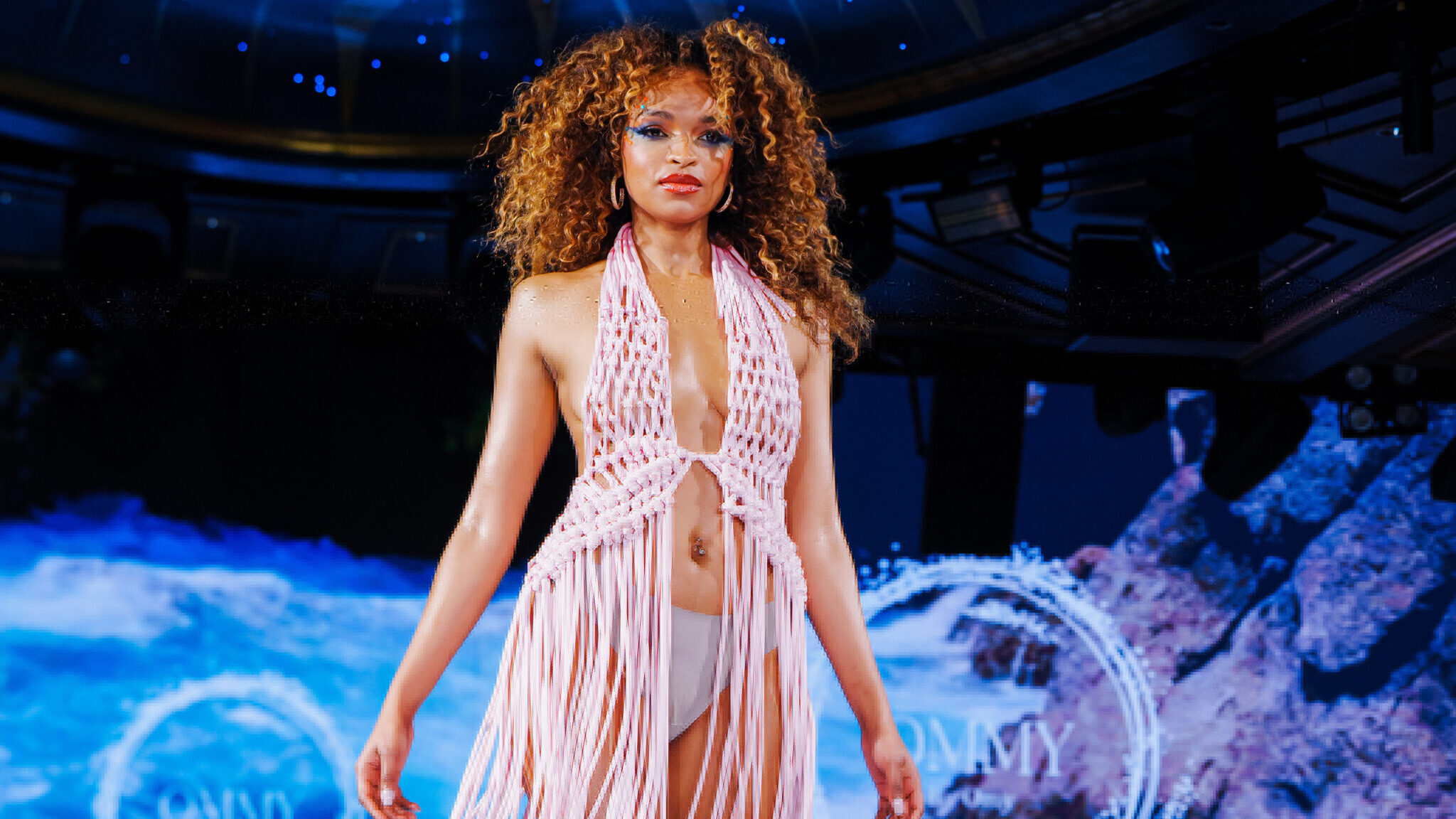
From February 12 to 15, Runway 7 staged its 10th consecutive season at New York Fashion Week, transforming Sony Hall into an international runway platform that bridged couture, streetwear, swim, sustainability, and global design innovation.

What began as an ambitious production concept a decade ago has evolved into one of the most expansive independent showcases on the New York calendar. This season’s programming featured more than 85 designers representing over 15 countries, positioning Runway 7 as both a launchpad for emerging brands and a spotlight for established international labels seeking visibility in the U.S. market.
A High-Profile Opening Night
The four-day presentation opened with a ceremony honoring CFDA designer Naeem Khan, who received the Excellence in Design award recognizing more than two decades of influence in luxury fashion. The tribute underscored Runway 7’s growing credibility within the broader fashion establishment.
Opening night also reflected the production’s stylistic range. Youth-focused design studios shared the schedule with celebrity-driven brands and contemporary lifestyle labels, creating a lineup that moved fluidly between avant-garde creativity and commercial appeal.

Streetwear, Swim and Contemporary Energy
Luxury streetwear and denim brands followed, offering refined takes on Americana, architectural construction, and activewear built for both runway and retail viability. The diversity in aesthetic demonstrated how New York continues to serve as an intersection point for global design languages.
Couture Craftsmanship and International Presence
Friday’s runway leaned into urban influence and modern consumer culture. Streetwear labels, swimwear designers, and athleisure brands delivered collections defined by bold graphics, structured tailoring, performance fabrics, and expressive silhouettes. The energy was amplified by a steady stream of media, buyers, and international press circulating throughout the venue.

As evening programming unfolded, the tone shifted toward couture and formalwear. Designers from South Asia, Europe, Latin America, and the United States presented collections anchored in heritage craftsmanship, precision tailoring, and ornate detailing. Embellishment, handwork, and sculptural construction defined several standout looks, reinforcing the global appetite for artisanal fashion.
Among the weekend highlights, Moon Chang closed Saturday evening with a finale centered on sustainability and technical innovation. Known for work previously recognized by Vogue, ELLE, Harper’s Bazaar, and WWD, Chang’s collection emphasized responsible production and experimental construction, signaling where high fashion may be headed next.
Couture designer Ren Haixi returned to the New York runway with a collection reflecting the dramatic precision that has attracted international celebrity clientele. Mediterranean designer Miguel Llopis presented structured silhouettes influenced by classical European techniques, adding further global dimension to the weekend.
Sustainability and the Next Generation
All photos by Runway 7 House Photographer: @anjastollphoto


Designer Jack Richard of Rich Out the Box used the Runway 7 platform to promote his sustainability-driven philosophy, encouraging conscious consumption under the message “Be good to your garment.” The theme resonated with a younger audience increasingly focused on longevity, quality, and environmental accountability.
Sunday’s “Made in Argentina” segment further expanded the international narrative. Designers showcased craftsmanship rooted in Argentine heritage while presenting silhouettes adapted for contemporary global markets. Menswear and tailored collections also gained attention, blending traditional structure with modern styling codes.

A Platform with Economic Impact
Beyond aesthetics, Runway 7’s tenth season reflected measurable business growth. Recognized on the Inc. 5000 list as one of America’s fastest-growing companies, the production continues to demonstrate how independent fashion showcases can create meaningful economic opportunity for designers, stylists, photographers, models, and production teams.
In a fashion ecosystem often dominated by legacy houses, Runway 7 has carved out a model focused on accessibility, international inclusion, and scalable visibility. Its 10-season milestone at New York Fashion Week reinforces that New York remains a magnet for global fashion entrepreneurship.
As the February shows at Sony Hall concluded, one takeaway became clear: Runway 7 is not simply hosting runway shows. It is building an ecosystem that connects emerging and established designers to media exposure, retail conversations, and international audiences in one of the world’s most competitive fashion capitals.
Writer: @onceuponatimebrit
Runway 7 House Photographer: @anjastollphoto
Runway Show: @runway7fashion
Special thanks: @susannapaliotta123
Paris Runway Official Models: @_riona_kd @bametcalf1 @oliviagearr @kellyarjen @edenskyofficial @simransandhu5 @anyalabanya@alexanderzwang @anniyahlynnrivera @naomiruth377
Runway 7 Sponsors Include:
Hospitality Partners: The New Yorker & The Marmara Park Avenue
Beauty Partner: Book of Beauty
Modelling Agency Partner: Tampa Bay Fashion Exp
Wellness Partner: Splish Naturals
Accessory Partners: Torras Life & ChakoLab
Catering Partners: Hard Rock Cafe, Nuovo York Pizza, Little Caesars, Round K, Gogojang, Miss Korea BBQ & Cafe Baires