

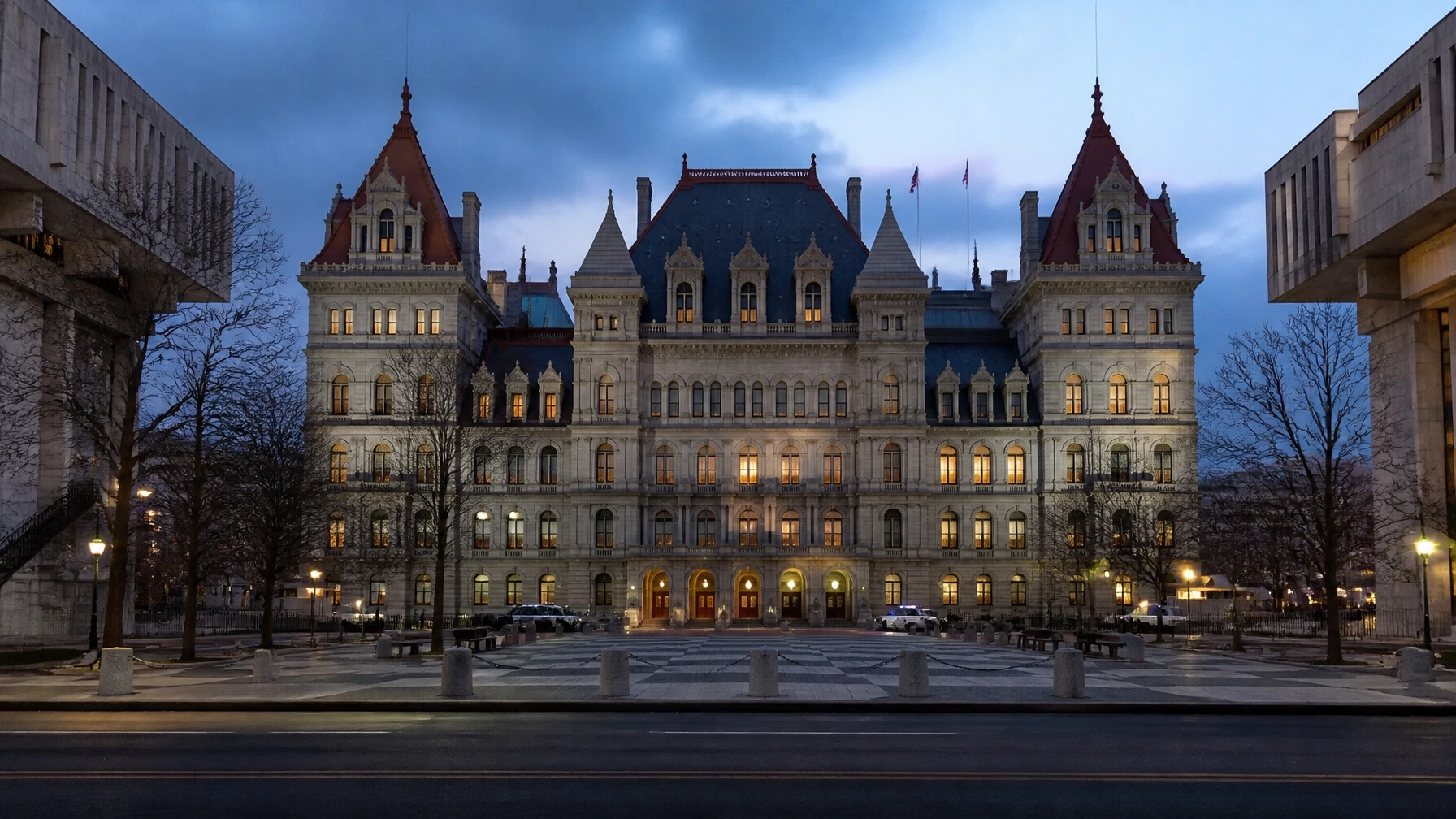
Federal prosecutors have charged Jessica Bowie, a 35-year-old Albany woman, with attempting to provide material support to ISIS in an alleged plot to bomb the New York State Capitol and kill state lawmakers.
Bowie made her initial appearance in federal court on Aug. 20, one day after FBI agents arrested her in Albany as she took possession of what she believed was an explosive device, according to the U.S. Department of Justice.
The case has become a major focus of Albany NY news, Upstate New York news, and New York breaking news coverage because investigators say the alleged plan targeted a central seat of state government and was disrupted before a real explosive device was deployed.
What federal prosecutors allege
The single charge accuses Bowie of attempting to provide material support or resources to a designated foreign terrorist organization, ISIS, in violation of 18 U.S.C. § 2339B(a)(1).
According to the criminal complaint filed in the Northern District of New York, the alleged conduct occurred between July 16 and Aug. 19 in Albany County and elsewhere.
Prosecutors say Bowie communicated with an FBI confidential human source who posed as an ISIS facilitator. During those conversations, she allegedly asked for help making explosives and identified the New York State Capitol as her preferred target.
The complaint says Bowie wanted to attack while state senators were meeting, destroy as much of the building as possible, and disrupt the American political system. Investigators also allege that she discussed fleeing to Syria after the attack to join ISIS-controlled territory.
The allegations remain unproven. The Justice Department has emphasized that the criminal complaint is an accusation and that Bowie is presumed innocent unless and until she is convicted in court.

Investigation tracked alleged online radicalization
The FBI investigation began after authorities identified social media activity that they attributed to Bowie, according to the complaint and federal officials.
Investigators allege that Bowie operated multiple online accounts and used them to express support for ISIS and other extremist views. The complaint states that she recorded and shared audio pledges of allegiance, known as bayah, to ISIS.
Federal authorities say she began communicating with the FBI source through an encrypted messaging platform in mid-July. The conversations allegedly moved from expressions of support for ISIS to discussions about a specific target, attack planning, escape routes, and the acquisition of materials.
The FBI’s affidavit describes the confidential source as a person with a history of providing reliable information who used FBI-approved devices to record communications. The complaint also identifies two additional confidential sources who met Bowie in person during the investigation.
Officials say the undercover operation allowed investigators to monitor the alleged plan while preventing access to an operational bomb or working firearm.
Capitol surveillance became a central piece of the case
The New York State Capitol is less than two miles from Bowie’s reported Albany residence, according to the complaint.
Investigators allege that she visited the Capitol grounds approximately five times between July 21 and Aug. 9. Surveillance teams and Capitol security cameras reportedly captured her photographing the building and surrounding areas.
The complaint says Bowie sent photographs of the Capitol to the undercover source and discussed potential access points, security conditions, and the timing of legislative sessions.
Federal investigators characterize the visits as reconnaissance connected to the alleged attack plan. Bowie allegedly told the source that she wanted to strike when the largest number of senators would be present.
The Department of Justice account of the case includes photographs that prosecutors say show Bowie purchasing materials and conducting surveillance near the Capitol.
The complaint also alleges that Bowie discussed using a food-delivery bag to disguise or transport the device. Authorities say she considered the Capitol an accessible but symbolically powerful target because it represented New York’s government.
Home Depot purchase documented by investigators
On Aug. 5, investigators say Bowie met two confidential sources in Albany and discussed the proposed attack.
According to the complaint, one of the sources gave Bowie $200 in recorded funds to purchase materials requested during the meeting. Bowie then directed the sources to a Home Depot store in Rensselaer, where she allegedly purchased items that prosecutors say were intended for an explosive device.
The complaint identifies a plastic bin of nails, electrical tape, a 9-volt battery, and acetone among the items. Bowie allegedly handed the materials to the confidential sources after leaving the store.
The materials were part of the government’s evidence of preparation, not a separate criminal charge listed in the complaint. Prosecutors are expected to use the purchase, along with the alleged communications and surveillance, to support the material-support allegation.
Investigators say Bowie also provided a food-delivery bag during a meeting the following day.
The case does not allege that Bowie built or deployed a functioning bomb. Instead, federal agents controlled the materials and later provided an inert device as part of the undercover operation.

Arrest followed an undercover meeting
The investigation escalated on Aug. 13, when Bowie allegedly asked the undercover source about obtaining a handgun and ammunition for use during the planned operation.
On Aug. 19, she met with the confidential sources again, according to the complaint. Prosecutors allege that she provided money for a firearm and ammunition and accepted what she believed was a working weapon and an explosive device.
Federal officials say both items were controlled by investigators. The alleged firearm was defective or inert, and the explosive device was not capable of detonating.
Agents arrested Bowie after she left the vehicle carrying the items. Investigators say they later found knives and a handwritten pledge of allegiance to ISIS on her person.
The FBI’s Albany Field Office led the investigation through its Joint Terrorism Task Force. The Justice Department’s official release says the U.S. Secret Service, Homeland Security Investigations, New York State Police, Albany County Sheriff’s Office, and Albany Police Department also assisted.
Officials say there is no ongoing threat
Federal and state officials said the alleged plot was disrupted before any attack occurred.
New York Gov. Kathy Hochul said there was no immediate threat to the Capitol following Bowie’s arrest, according to NBC News’ report.
Hochul also said the state had strengthened security around the Capitol and other government facilities amid broader concerns about threats and political violence directed at public officials.
FBI officials described the case as an example of a joint investigation that identified a potential threat before it could result in casualties. Prosecutors said the investigation remains active, but federal officials have not announced additional defendants.

What comes next in federal court
Bowie appeared before U.S. Magistrate Judge Daniel J. Stewart on Aug. 20 and was detained pending further proceedings, according to the Northern District of New York U.S. Attorney’s Office.
The charge carries a statutory maximum of 20 years in prison, a fine of up to $250,000, and a lifetime term of supervised release if the defendant is convicted. Those penalties are maximums rather than a prediction of the sentence Bowie would receive.
The next stages will likely include continued detention proceedings, the government’s disclosure of evidence to the defense, further court appearances, and consideration of whether a grand jury returns an indictment. The complaint currently establishes the government’s allegations and probable cause; it does not determine guilt.
Federal prosecutors Ryan White of the National Security Division’s Counterterrorism Section and Assistant U.S. Attorneys Richard Belliss and Joseph Hartunian are handling the case.
Bowie’s defense position, including whether she will seek release or challenge the charge, had not been detailed in the federal releases reviewed for this report.
Why the case matters to Albany
The alleged target is not only a prominent Albany landmark but also the working center of New York’s legislative government.
A successful attack could have threatened elected officials, employees, visitors, and emergency responders while disrupting state operations. The investigation also underscores how authorities track cases that allegedly combine online extremist activity, contact with purported foreign-terrorist representatives, surveillance of a government facility, and efforts to obtain materials.
At the same time, the legal posture remains limited to one federal accusation. The government must prove the elements of the material-support charge beyond a reasonable doubt, and the evidence described in the complaint will be tested in court.
For Albany residents, the immediate message from officials is that the alleged plot was stopped before a real device reached the Capitol. For federal investigators and prosecutors, the case now moves from a covert operation into a public criminal proceeding.
New York News Daily will continue following this case and other news from across New York as additional court records and official statements become available.