

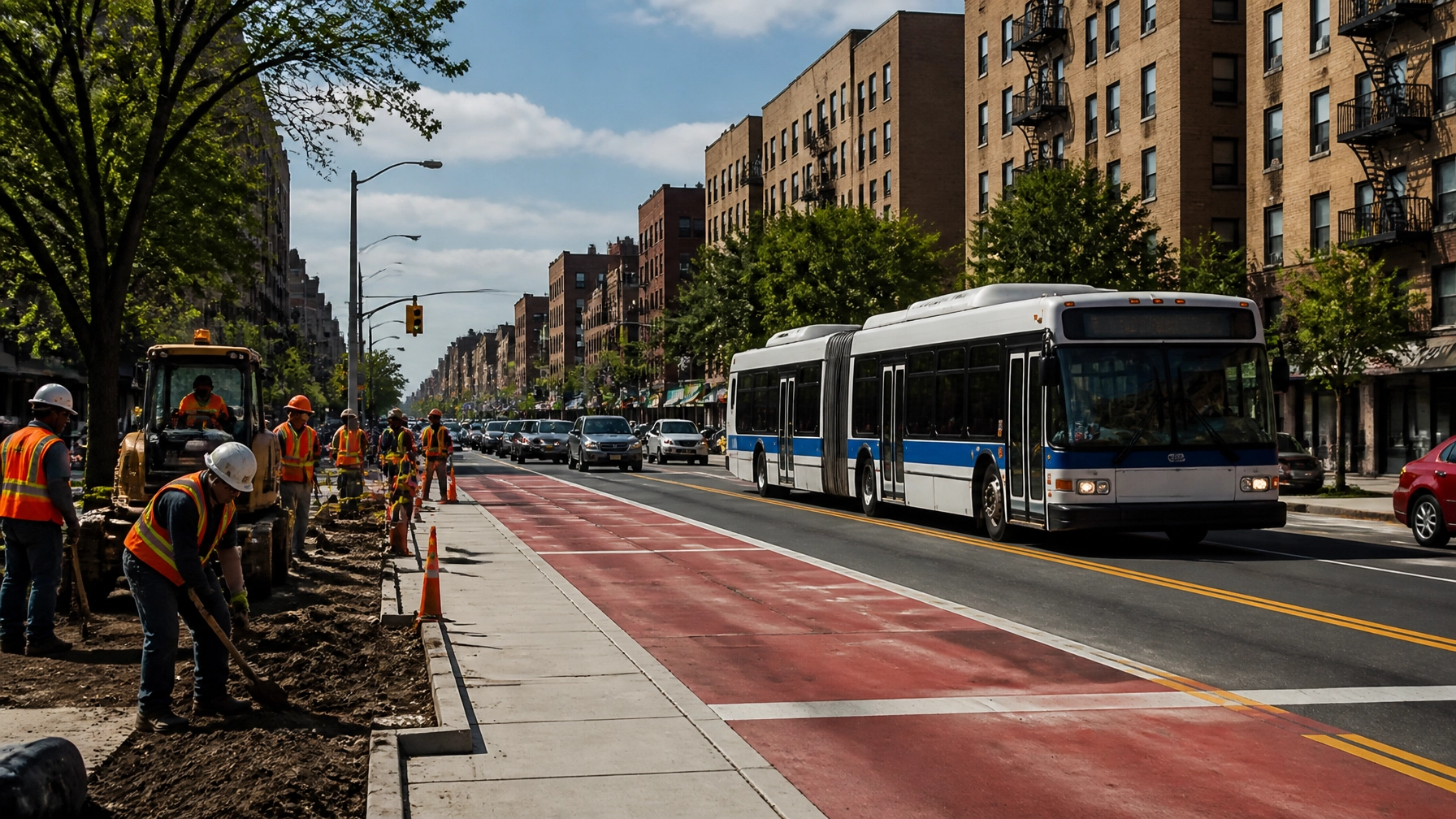
Mayor Zohran Mamdani’s administration is breaking ground Wednesday on the Bronx’s first busway, launching a long-delayed project designed to speed service for nearly 40,000 daily riders along Tremont Avenue.
The project centers on the Bx36, a critical east-west route that connects Bronx neighborhoods to subway lines, Metro-North Railroad service and other local bus routes. During peak periods, buses on the corridor can move as slowly as 5 miles per hour, according to city officials and reporting by amNewYork.
The construction marks a significant move in New York politics and transportation policy after the project was stalled under former Mayor Eric Adams’ administration. Mamdani has positioned the busway as an early test of his pledge to deliver faster, more reliable public transportation across the five boroughs.
“After years of slow and unreliable service, Tremont Avenue is finally getting the upgrades that Bx36 bus riders have long deserved,” Mamdani said in a statement cited by amNewYork.
A major transit upgrade for the Bronx
The Tremont Avenue busway will use dedicated lanes and traffic restrictions to give buses priority over most private vehicles. The design will cover approximately one mile of the corridor through two separate busway segments:
- An eastbound busway from Third Avenue to Southern Boulevard.
- A westbound busway from Southern Boulevard to Belmont Avenue.
- An offset shared bus-and-bike lane eastbound from Webster Avenue to Third Avenue.
The busway will operate seven days a week from 6 a.m. to 8 p.m. During those hours, buses, emergency vehicles, trucks with six or more wheels and Access-A-Ride paratransit vehicles will have full access to the designated lanes.
Private vehicles, taxis and for-hire vehicles will generally be restricted to local access. Drivers entering from side streets will need to leave the corridor at an eligible turn, while the westbound section will preserve local access for pickups, drop-offs, deliveries and parking, according to the latest project details reported by amNewYork.
Stationary traffic cameras, bus-mounted cameras and the NYPD will enforce the restrictions. The enforcement plan is intended to prevent vehicles from blocking the lanes, a common problem on existing bus corridors that can erase the benefits of transit-priority projects.
Service built around a transit-dependent community
Tremont Avenue serves a community with limited access to private vehicles. City data cited in the administration’s announcement shows that approximately 72% of households along the corridor do not own a car.
That figure makes bus reliability a central quality-of-life issue rather than a secondary transportation concern. Delayed service can affect commutes, school arrivals, medical appointments, shopping trips and access to employment across the Bronx.
The Bx36 is particularly important because subway service in the borough largely runs north and south, leaving fewer convenient east-west options. A faster Tremont Avenue route could reduce the time riders spend transferring between buses and trains while improving access to destinations outside the immediate neighborhood.
The project is part of the city and state’s broader Next Stop: Fast Buses, Better Service plan, which aims to improve bus speeds on more than 175 routes and reduce trips by as much as six minutes on priority corridors.
The Tremont project is also identified as a future bus rapid transit-style corridor, suggesting that the current work could form the foundation for a more comprehensive system of dedicated lanes, upgraded stations and faster boarding.
Safety improvements included in the redesign
The busway is intended to improve safety as well as speed. Tremont Avenue has been identified by the city Department of Transportation as one of the Bronx’s more dangerous corridors.
Nearly 630 people were injured in crashes along Tremont Avenue between 2020 and 2024, including 46 people who suffered severe injuries and four people who died, according to city data. The planned redesign will add pedestrian improvements at eight intersections, including locations near Webster Avenue, Third Avenue, Southern Boulevard, Crotona Parkway, Washington Avenue and 180th Street.
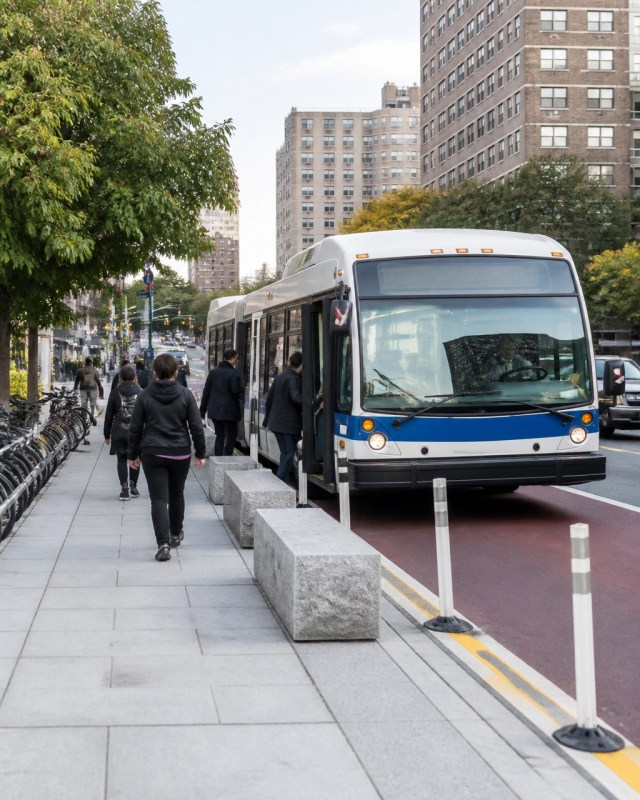
The safety measures include painted sidewalk extensions that shorten pedestrian crossings and encourage turning vehicles to slow down. Flexible delineators, granite blocks and bicycle parking will reinforce portions of the new curb space and discourage illegal parking.
Those features are designed to create a clearer separation between buses, vehicles, cyclists and pedestrians. They also reflect a broader shift in city street design toward physical or highly visible treatments rather than painted lanes alone.

City officials say busways across New York have increased bus speeds by as much as 60%, while related street-safety treatments have helped reduce injuries on some corridors. The results along Tremont Avenue will depend on enforcement, construction execution and how effectively the new design manages deliveries and local vehicle access.
A project revived under Mamdani
The Tremont Avenue busway was scheduled to begin earlier but was delayed under the previous administration. Mamdani’s decision to restart construction places the project among several transit initiatives his administration has revived or advanced since taking office.
“Bronx residents deserve world-class bus service : and that starts with finally delivering on upgrades promised years ago,” NYC DOT Commissioner Mike Flynn said in a statement.
The administration has also moved forward with bus-priority projects on Fordham Road and 161st Street in the Bronx, along with initiatives on major corridors in Manhattan, Brooklyn, Queens and Staten Island.
The political stakes are significant. Faster buses are one of the most visible ways for City Hall to demonstrate progress on transportation, particularly for neighborhoods where residents rely heavily on buses but have historically faced slow service, overcrowding and inconsistent travel times.
The busway also gives the administration an opportunity to show how its transportation agenda can combine transit improvements with pedestrian and bicycle safety. Supporters see the project as a practical investment in working-class communities, while implementation will require the city to manage concerns over traffic circulation, parking and deliveries.
What riders should expect
Construction will begin with the installation of the busway treatments, street markings and safety features along the designated sections of Tremont Avenue. Riders should expect temporary work zones and changing traffic patterns as crews build the new corridor.
Once operational, the busway will give priority to buses during the morning and evening portions of the day, although the exact experience for riders will depend on whether enforcement keeps private vehicles from entering or stopping in the lanes.
The city has not presented the busway as a replacement for subway service. Instead, the project is intended to strengthen the Bronx’s surface transit network by making one of its most important crosstown routes more dependable.
For the nearly 40,000 daily riders who depend on the Bx36 and other service along Tremont Avenue, the central promise is straightforward: less time stuck in traffic and more predictable trips across the borough.

A test for New York’s fast-bus strategy
The Tremont Avenue groundbreaking arrives as the Mamdani administration expands its transportation agenda beyond a single corridor. The city is also beginning community engagement for potential rapid bus improvements on Flatbush Avenue, Utica Avenue and Church Avenue in Central Brooklyn.
Together, those Brooklyn corridors serve approximately 150,000 riders across 13 bus routes. City officials say the Bronx and Brooklyn initiatives could eventually improve commutes for nearly 200,000 daily bus riders.
For Tremont Avenue, however, the immediate focus remains local: delivering the Bronx’s first busway, improving the Bx36’s speed and reliability, and reducing dangerous conflicts along a busy neighborhood street.
The NYC Department of Transportation’s Tremont Avenue project page provides additional information about the planned busway, operating hours and street design. The latest announcement was first reported by amNewYork, with further project details available through the New York City mayor’s office.
New York News Daily will continue tracking construction, traffic changes and rider impacts as the Tremont Avenue busway moves from groundbreaking to operation.