

For the first time in over five decades, humanity is once again standing at the edge of deep space.
The NASA Artemis II mission has officially entered the Moon’s gravitational “sphere of influence,” marking a defining moment in modern space exploration. At approximately 39,000 miles from the Moon, the spacecraft has crossed a critical threshold where lunar gravity now outweighs Earth’s pull, signaling that the crew is no longer just leaving Earth, but actively stepping into lunar territory.
This milestone comes just over four days into the mission and sets the stage for the most anticipated phase yet, a far-side lunar flyby that will carry astronauts deeper into space than any humans have traveled before.
A Record-Breaking Journey Beyond Earth
Onboard the Orion spacecraft are four astronauts, Reid Wiseman, Christina Koch, Victor Glover, and Jeremy Hansen, representing both the United States and Canada in a mission that signals a new era of international collaboration in space.
At the mission’s peak distance, the crew will reach approximately 252,757 miles from Earth. This surpasses the previous record set during Apollo 13 mission by more than 4,000 miles, officially making Artemis II the farthest human journey into space in history.
It is also the first time humans have crossed into deep lunar space since Apollo 17 moon landing, closing a gap of more than 50 years.
Preparing for the Far Side of the Moon
As the spacecraft approaches its lunar flyby, the crew has spent their time preparing for high-stakes operations. These include manual piloting demonstrations, reviewing scientific observation objectives, and conducting safety checks on their space suits, which serve as critical life support systems in case of emergency.
The upcoming flyby will begin around 2:45 PM ET, initiating a six-hour observation window. During this time, the crew will collect data, observe the lunar surface, and prepare for one of the most visually striking moments of the mission.
Shortly after, the Orion spacecraft will pass behind the Moon, temporarily losing communication with Earth. This blackout period is expected and mirrors similar moments experienced during earlier Apollo missions.

A View Unlike Any Other
At its closest approach, Orion will come within approximately 4,066 miles of the lunar surface. From this vantage point, astronauts will be able to see the entire disk of the Moon at once, including regions near both the north and south poles, a perspective rarely witnessed by human eyes.
The mission will also deliver a rare celestial alignment. As Orion, the Moon, and the Sun align, the crew will witness a solar eclipse from space, watching the Sun disappear behind the Moon for nearly an hour. It is a moment that blends science, scale, and human curiosity into a single, unforgettable experience.
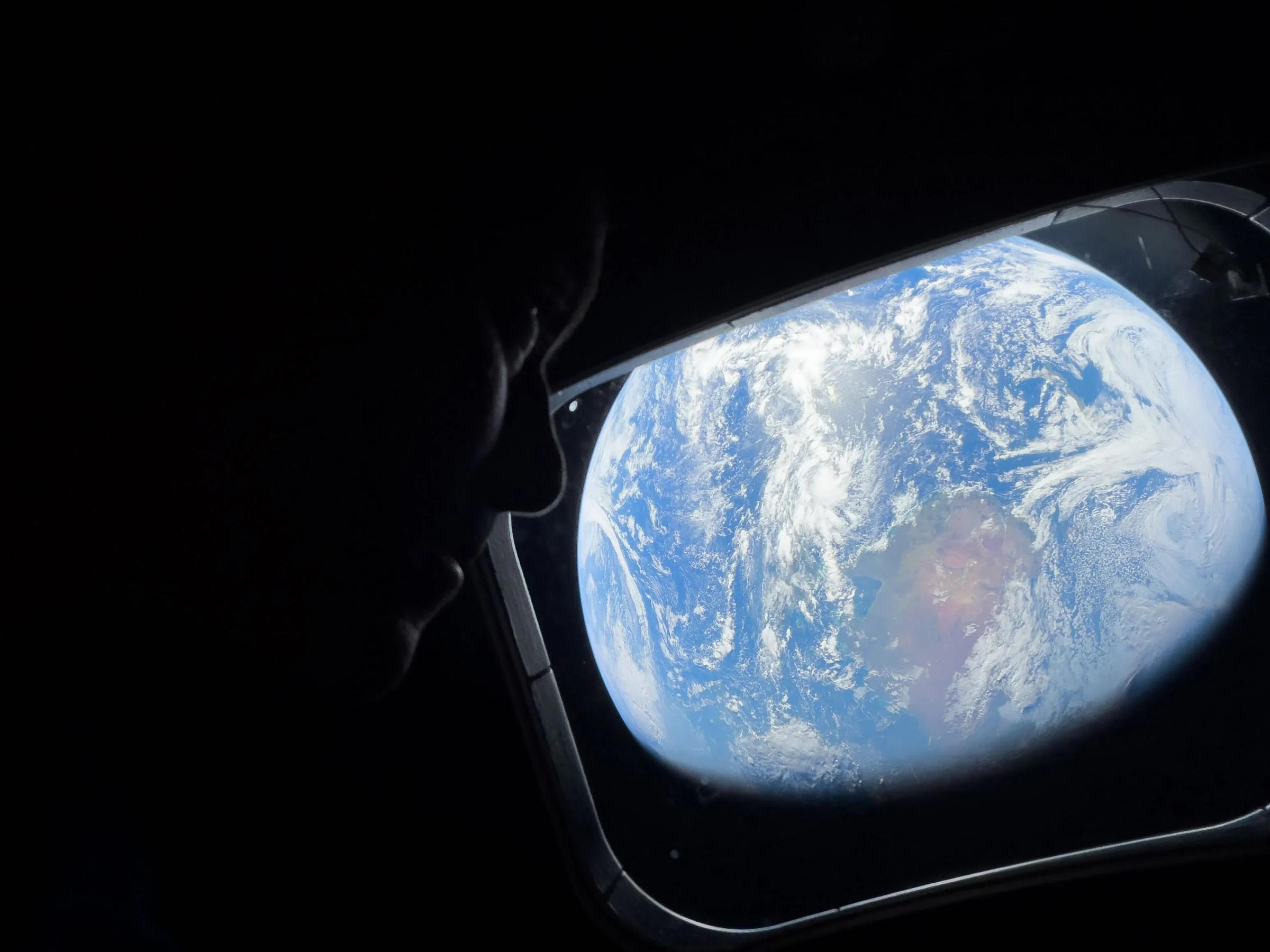
Meanwhile, images released by NASA already show astronauts gazing back at Earth through Orion’s windows, a reminder of just how far they have traveled, and how small our planet appears from the vastness of space.
A Defining Moment for the Artemis Era
The Artemis II mission is more than a record-breaking journey. It is a foundational step toward sustained human presence on and around the Moon. By testing systems, crew operations, and deep space navigation, this mission paves the way for future lunar landings and eventual missions to Mars.
With global attention fixed on this mission, Artemis II represents a shift in momentum, from looking back at past achievements to actively building the future of human space exploration.
As the spacecraft prepares to loop around the far side of the Moon, one thing is clear, humanity is not just returning to space, it is pushing further than ever before.